





 testimonies
 media & content




 I didn’t understand the point of these mappings


Why? Because the arrests I could understand. They’d tell us, “Okay, now we’re going out to arrest a man with blood on his hands, he carried out an attack, he took part in planning an attack.” I could understand that, okay. When we’d go out to do mappings it really bothered me because I couldn’t see the point of it, the reason. It felt like something that crossed the line a bit.
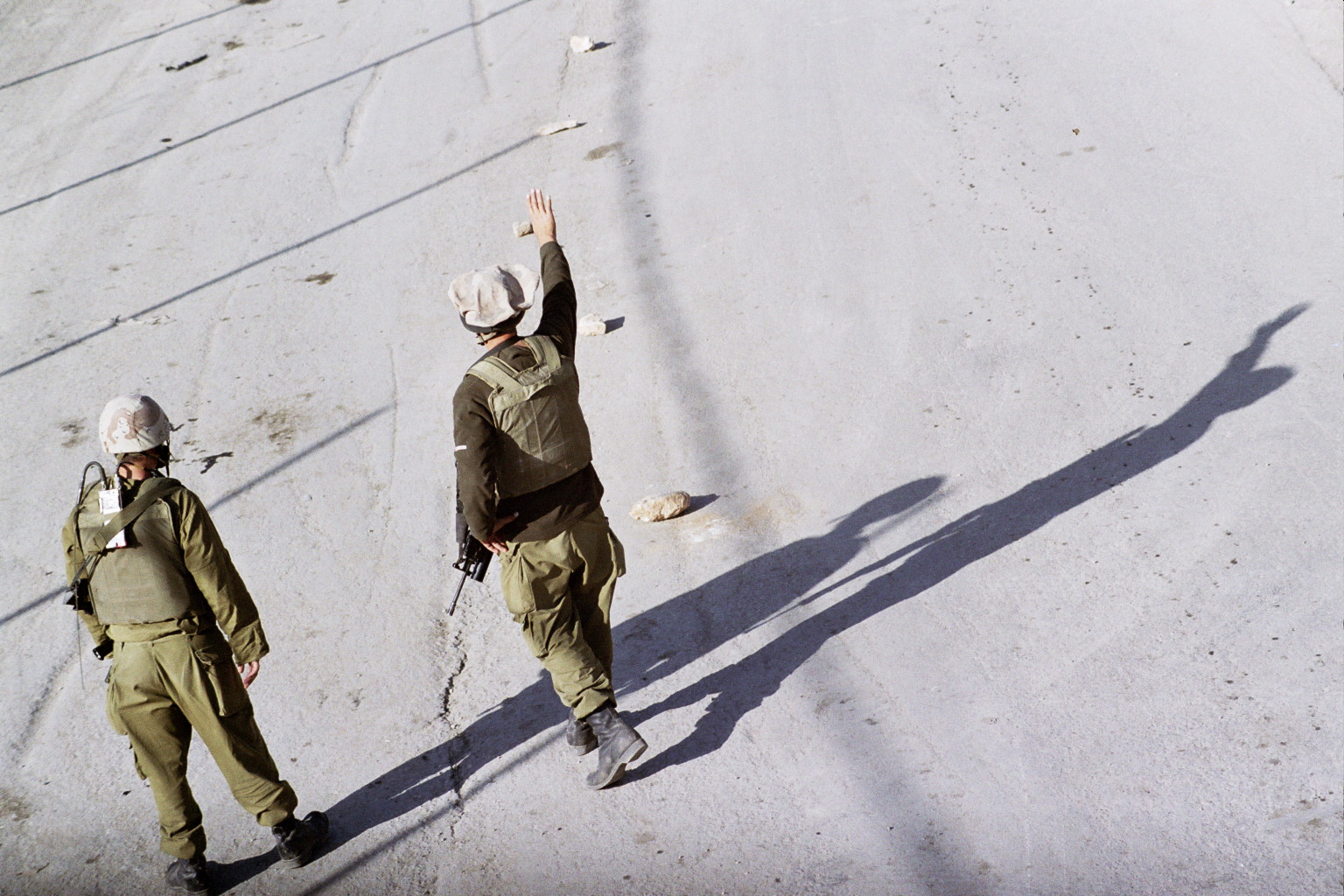
You’re a platoon commander now? Yes, I’m a platoon commander. Why cross the line? I get that there’s some operational need for mapping, and it helps our operations somehow with intelligence, and maybe helps us deal with terrorists later on. But it was very hard for me to come in the middle of the night, with eight or ten other soldiers wearing flak jackets, helmets, weapons, magazines loaded, going into someone’s house, waking them up, start searching their house, start asking them embarrassing questions.
Like what? “Who are you, and what are you, and what’s she doing here, and how many people live here?” I don’t know, the questions depended on the situation.
There wasn’t some kind of form? There was, but it doesn’t always work like it says on the form. Sometimes it also . . . Basically, what bothered me really was going into people’s homes in the middle of the night in this threatening way. I remember being really angry seeing how it affected the little kids. It really upset me. You see a small child, three, four, five years old, a young girl, you go into their house in the middle of the night, you come in, you take . . . she sees her father shaking—her father, the man, the authority figure, is shaking—they come, take him aside, interrogate him, ask him questions. Sometimes soldiers who do the questioning more aggressively, maybe it’s their voice, maybe they add a shove here and there if they think someone’s not cooperating. And this was really hard for me. The mappings were really hard for me. Because the mapping is for some kind of intelligence purpose, it’s not like I’m there to arrest a suspect who we know shot at a passing car last week and killed some innocent civilians. So it was really tough for me. And listen, I wasn’t, I didn’t have the kind of influence where I could say, “Okay, we’re not going out to do mapping.” There’s no such thing as not going out to do mapping. So when I’d do the mapping, I’d try to do it in the best possible way from a humanitarian perspective. I wouldn’t bother the families too much, I wouldn’t throw stones at the door in the middle of the night to wake them up with a start, because that’s what they do, it’s one of the steps in the procedure.
But isn’t that the procedure for an arrest? Yes, but it was also the kind of procedure for this, too, because you knock on the door and no one answers you, so you throw a rock. And people get confused between an arrest and a mapping, so they throw a rock.
Straightaway? Yes. Sometimes they also break windows, they throw the rock at a window.
Were these mappings in a rural area? A rural area, also rural-urban. The Yatta area, Dura area. The whole area of the South Hebron Hills. Mapping in that area.
Is there in fact an official form? Have you seen it? Yes.
What’s on it? I don’t remember exact details, but ID numbers, names.
Of all of the people in the house? Of all of the people in the house.
Kids, too? The kids don’t have IDs, but we note how many kids there are.
How would you map the house that we’re sitting in right now? I write down the ID numbers and names of everyone who lives here, everyone who’s inside the house.
In Hebrew, of course. Yes. I write down how the house is built.
Do you draw a plan? I don’t draw a blueprint, but I do write down how many rooms there are.
That’s according to the form? Yes, according to the form. How many rooms there are, how it’s built, if there’s a storage area, if there’s some structure, if there’s some kind of attic. Really mapping it.
If you were to see a form like that, would you be able to understand how the house is built? Not always, but I’m not sure that what we did was really serious. Maybe yes, maybe no. That I don’t know. I also don’t know who gets this information and what they do with it. It must have some kind of use, but not that significant, and not always—I don’t think it always has a function. I’m sure that in many cases they just did the mapping, and they don’t really have any use for the information. There’s also mapping of houses that have already been mapped.
How do you know that? Maybe they’d say, “They were here already, you already did this last week, you were already here, there already.”
And you did it anyway? Yes, as part of the mapping. The form might be some kind of cover, but going there again is a way to show our presence, going into their houses again. The army’s interest in this, what they’d say to us was, you have to be active, you have to go out and act so they won’t come to you. So you have to be active in their territory.
What else did you have to check? Who owns the home, who actually lives there, who’s there now. Just because—if you have someone there who doesn’t live in the house, then it’s worth checking why he’s there. That’s it, mostly. Maybe their occupations, too.
What else did you ask that wasn’t on the form? You said there were embarrassing questions. Embarrassing questions depend on the situation. It really depends on the situation. Of course embarrassing questions were thrown out there, I remember that embarrassing questions were asked. I can’t tell you exactly what.
Were there questions that went into private matters? Of course there were. Maybe not all the time, but there were questions like that.
Were there mapping operations? Yes, sometimes there are mapping operations.
How many houses did you map? In one operation?
No, in total. Did you cover all of Yatta? It’s a huge place. We didn’t cover all of Yatta, but the mission was to cover all of Yatta. So our company comes in, we map a certain amount, and then another company comes, and they map more houses. The objective is to map all of Yatta. I’m sure that they’ve mapped Yatta a few times already.
Could you actually go into Yatta, into the village? [Yatta, a sizable town, is within Area A, under the control of the Palestinian Authority]. Yes.
You moved around there freely? With vehicles, two armored vehicles.

 terms of use & privacy policy