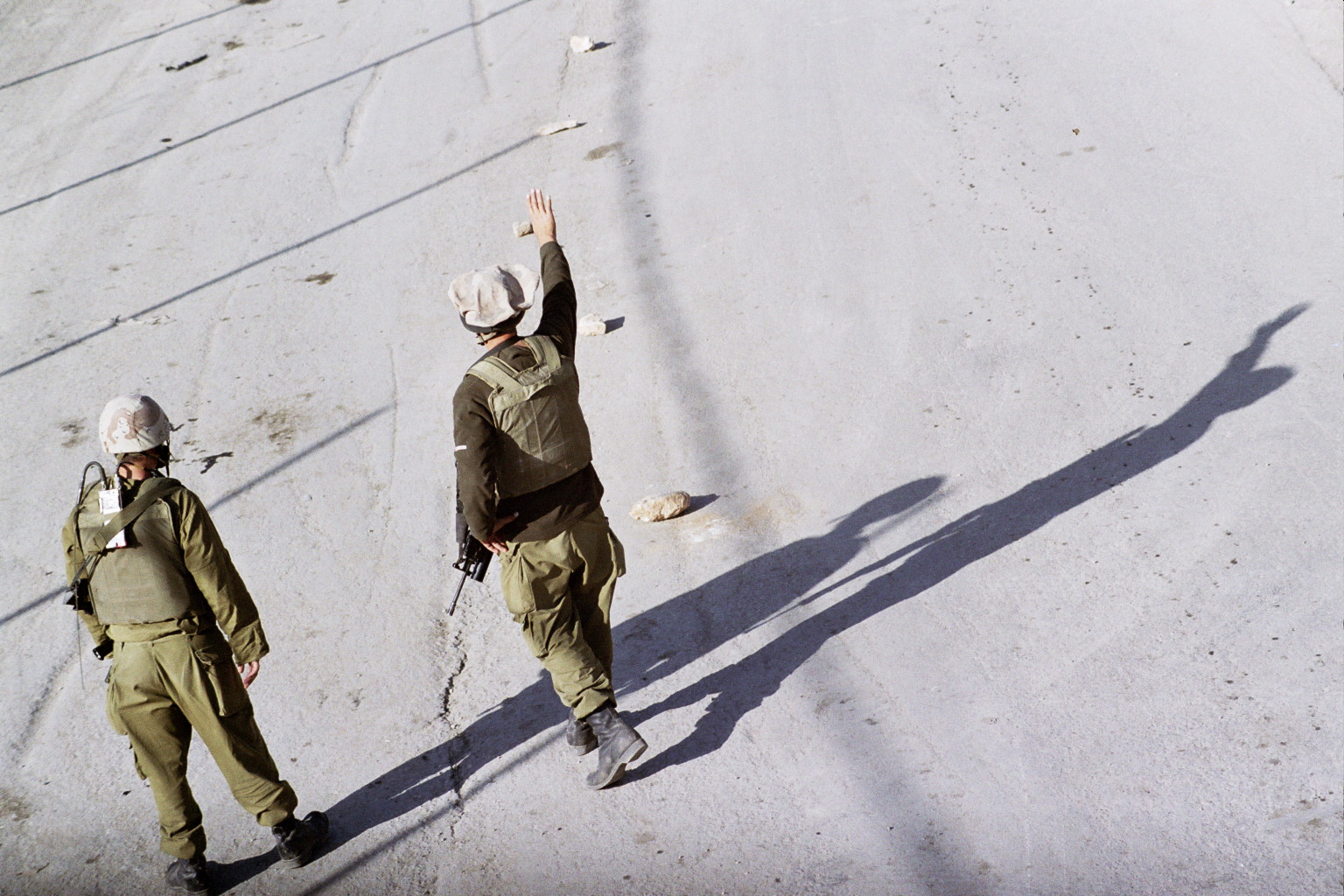
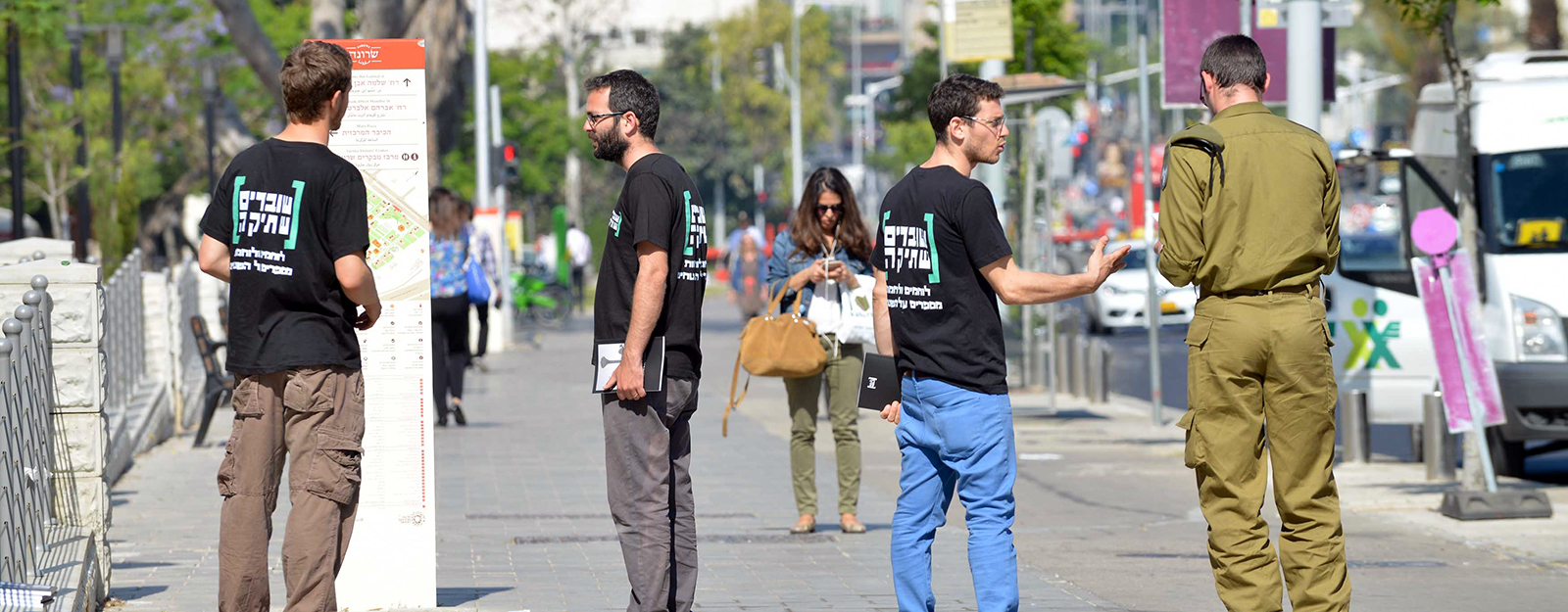
When I was commander at the company-in-training and then got to operations, we were at a checkpoint, I don’t remember the name.
Where?
It was in Elkana, at a fence that separates the Jewish and Palestinian houses, and there’s still one Palestinian house on the Jewish side— they made a mistake with the fence there, and because of that there’s a checkpoint. Their whole access was . . . There were families on the other side so they had to cross there, so the army put up a checkpoint. There were rules for who could cross, I don’t remember what exactly, it’s forbidden to cross if they don’t have this document or that permit, a work permit. There was someone coming back from the other side, and he pretended that he didn’t understand why he couldn’t go in. He had a bag in his hand, and he was asking why, why, and he knew very well why. After two hours he came back and said he was the other guy’s twin, I don’t remember if he had a permit, I don’t think he did. He really annoyed us . . . I don’t like talking about it . . . He really annoyed us, and we decided to punish him, so we put him in a corner, with his bags and everything, blindfolded and handcuffed him and he sat there for four or five hours. Just like that, like, it’s something I’m ashamed of. I’m ashamed. I don’t know . . .
Why?
Because it’s, my god, a totally different world there with totally different rules. In this world, that story is unacceptable, at least for me . . . there it’s so natural. The rules are so different. No one understands this unless they’ve been there. If I tell one of my girlfriends . . . it’s a little story out of many shocking stories, it’s a little thing that makes me feel uncomfortable. If I told a friend who didn’t go into the army whose ideology is—I don’t know how she’d react.
Did you tell anyone?
No.
Did you feel ashamed at the time?
No.
How many people were there?
Three.
What did they think about it afterward? Or today?
I don’t talk to them today.
But did you talk about it afterward, about whether it was okay or not? That maybe he deserved better?
I remember that at some point, one of my soldiers said he’d bring him water or he’d go and release him. Yes, they felt a bit . . . But we really didn’t talk about things like that, what happens—happens.
When did you start thinking about the incident?
When I was released, only afterward, also, some time after.
How did it suddenly come up?
All of a sudden, a picture. This powerful image I get whenever people talk about what they did in the army. I saw a documentary on Channel 8 about women soldiers. A lot of images came up during the movie. Images that I never thought about at all.
Were there other incidents like that? Similar?
All kinds, yes.
You don’t remember?
I have images in my head, but I don’t remember details. I really repressed that period. It’s not like I suffered there or that I’m traumatized, but I finished the army and I started a totally different life. I’m telling you, the most banal things, I don’t remember terms for them. I know what you’re talking about, but you have to remind me.





 testimonies
 media & content





 I’m ashamed of what I did there


 terms of use & privacy policy