





 testimonies
 media & content




 WHEN THESE PEOPLE INVADE THEIR NEIGHBORHOOD AND THE MILITARY SECURES IT, I ASSUME THEY’RE SCARED


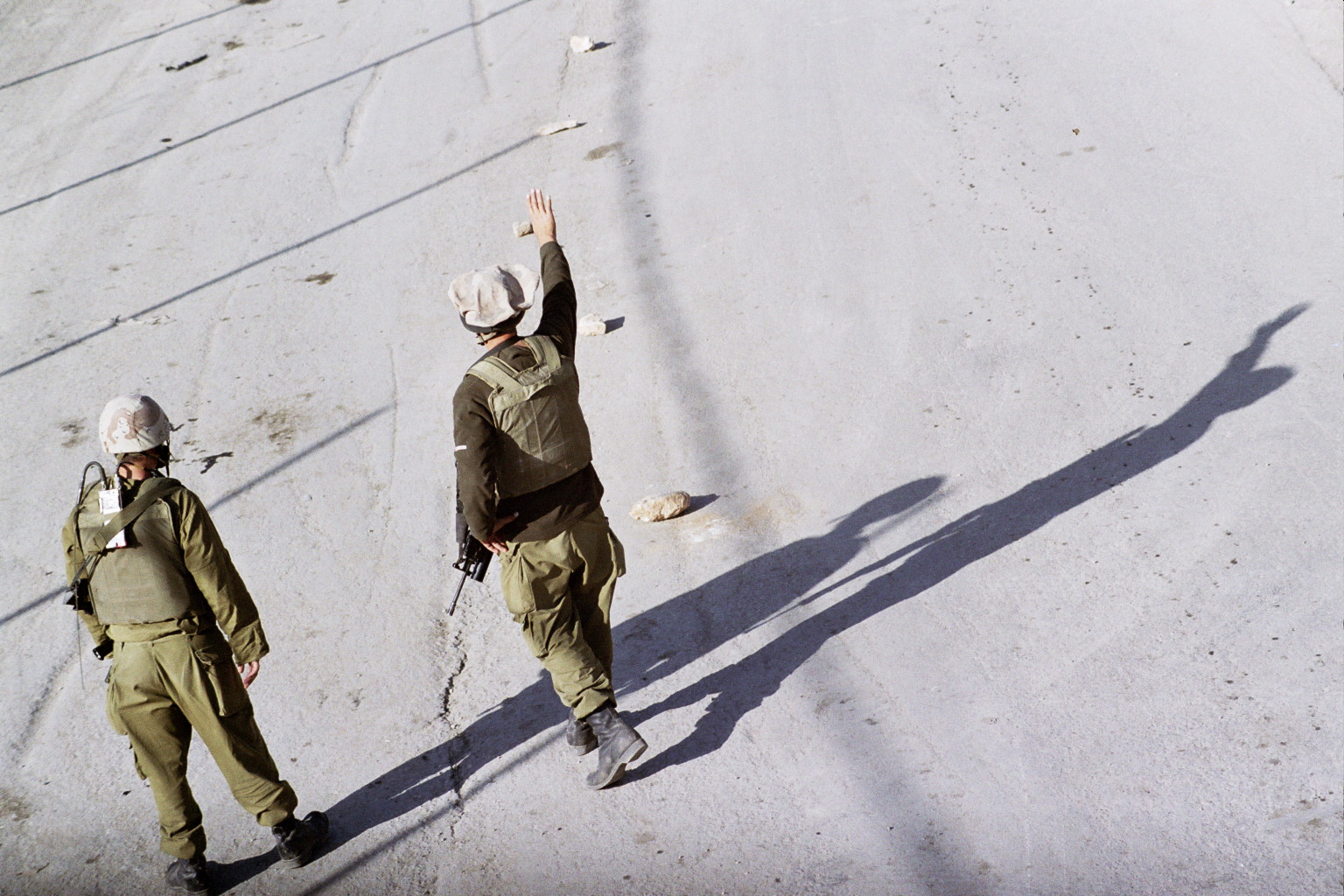
Hebron on Shabbat Chayei Sarah (a weekend named after the Torah portion, that tells the story of the purchase of the Tomb of the Patriarchs in Hebron) is just the most extreme. 30,000 people arrive at the Tomb of the Patriarchs, looks like Woodstock. A friend of mine said it’s like Burning Man for the ultra-orthodox Jews, but at the end you burn an Arab. A lot of people came, and it was just a really intense encounter, how the military conducts itself with the settlers. The Golani deputy battalion commander who commanded us there was a really good man and tried to do the best he could, but at a certain point they (the settlers) simply started walking through one of the Muslim quarters there, so we had to go in, the whole reinforcement company, into this neighborhood and secure the passage. We were there for hours, the military secured movement there that isn’t supposed to happen. It passed and it happened.
Are you supposed to secure the Worshippers Route (a road connecting the Kiryat Arba settlement to the Tomb of the Patriarchs in Hebron)? Yes. The movement is on the Worshippers Route from Kiryat Arba and there’s a path to the Tomb of the Patriarchs, a path that’s open to Jews on holidays. The thousands of worshippers go in and out of Hebron, they’re sometimes very violent and invade Palestinians’ stores that are located there, break things, and that’s a constant point of friction between soldiers and Jews. I was there for a whole day and I got into fights with Jews and it was a very interesting experience but this incident specifically, [was] at the top of the route. A stream of people starts passing through the Kasbah and directing people to go there, a pretty big movement of Jews through the Kasbah.
Their own initiative? The settlers’ own initiative, and what happens is that the Golani battalion has to secure this road now because it passes through a hostile Muslim neighborhood. So, at this point, they go and open a passage there, everyone is pretty stressed and panicked, all the officers, because it really is a difficult and complicated situation to secure.
What are the repercussions of something like this in terms of the people who live in the area that’s being passed through now? They can’t leave their house and it’s probably very scary because these people know they (the settlers) don’t want them to stay there or live there. So when these people invade their neighborhood and the military secures it, I assume they’re scared.
The force that’s there, can’t it prevent this thing? After all, it’s probably dangerous both for the soldiers and for the settlers. The force that was there really wanted to prevent it. The Golani deputy battalion commander who was on duty that weekend was really level-headed on this thing and was really displeased, but they’re Jews and that, so you can’t really stop them.
But it’s the military who’s responsible for law and order in this area, isn’t it? When the first ones (settlers) went and directed [others], they (the soldiers) didn’t realize it. They caught on to this movement only at a later stage, and by then, there were already dozens of people who had already done it, and were potentially inside the neighborhood already, so they decided to secure it.
Hypothetically, can Palestinians who live in that same spot, where the Jews turned, also go into the Jewish area? Of course not. The military invests loads and loads of resources to ensure that there won’t be any spontaneous access to Jewish spaces in order to secure them.
If the military wanted to prevent this movement of Jews, could it use the same means? Of course it could. Anything is possible; It's clear that they don’t want to.

 terms of use & privacy policy