





 testimonies
 media & content




 WE WERE JUST TOLD: YOU HAVE TO LISTEN TO THEM


There was a story that shocked me when we guarded, there are lots of [Palestianian] villages around [the settlement of] Kedumim. There’s Kafr Qaddum which is kind of the most cut off from the area.
From the Palestinian cluster? Yes. The growth of Kedumim pretty much cut it off from Nablus and that’s why they have a protest every Friday, but in the day to day, all these villages around, like there isn’t a fence that separates them. There are all kinds of lands that get cultivated and people go and pick things. I had a story, like there’s a security call center inside Kedumim which is, like where they have cameras and it’s not a center that’s staffed by the IDF, it’s a private company I think or maybe it belongs to the settlement itself. There are the military’s cameras too, but, for example, for anything that relates to the security of Kedumim, their cameras are more relevant. So they identify people approaching, there’s some imaginary red line that Palestinians must not cross. So we were asked by this call center to go to some place, to this kind of grove in an in-between area.
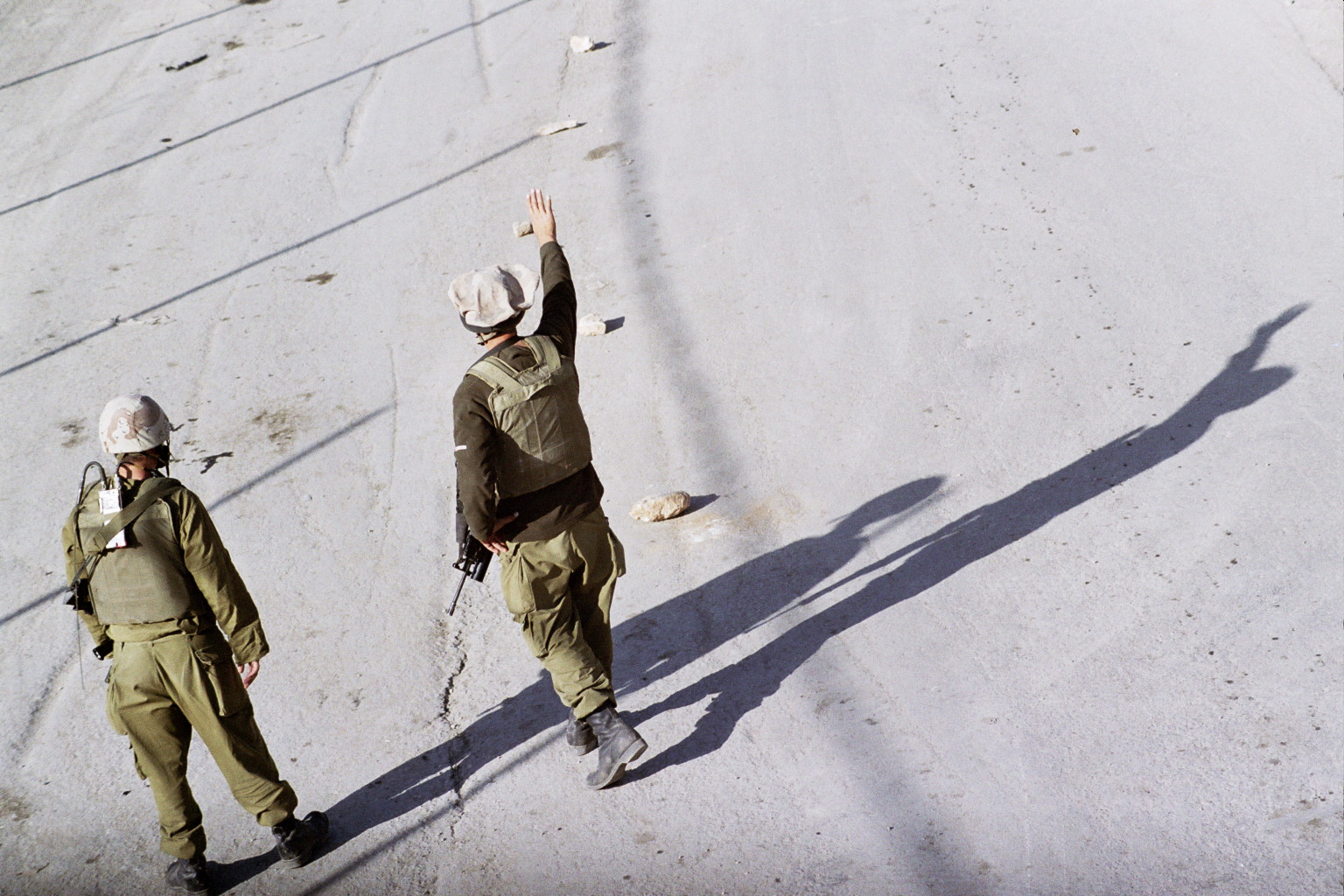
A grove between Qaddum and Kedumim? Between Qaddum and Kedumim, an olive grove where they just saw people from Qaddum walking around. So we got there and it was a man and a woman, relatively, like 40-50 or so, and they’re like picking leaves on bushes that grow between the trees, picking all kinds of leaves, I don’t know what it was. And that’s it, we came and said: Okay, you can’t be here, you have to leave. And then they said: Okay, we’re in the middle of picking these leaves here, we only need ten minutes, we’re just filling up our plastic bag and we’ll go. So it seemed fine to us as soldiers, we said: Okay, we’ll wait here, you finish up. So we called the call center on the twoway radio and told them what happened, and they said: No, they can’t stay there. They’ve already crossed the red line and you have to kick them out. It really angered me. These were people my parents’ age so I said, like, let’s let them finish. And then we gave them a few minutes and I had the thought of helping them. It seemed ridiculous to me. We got on the two-way radio again and asked for five minutes and again they said: No, they can’t be there, kick them out now, now, and in the end we just didn’t let them finish and we kicked them out. That’s a story that showed me how ridiculous this whole thing is.
Tell me, in this operations room in Kedumim, what's your relationship with them like? If they say that you have to kick those Palestinians out of there, do you do what they say, or how does it work? Yes. I don’t think it was that clear. Ultimately they’re not our commanders, but they’re kind of understood as, I don’t know, as locals who know the area better than we do. We arrive for a few months, you know, and learn the area and leave. I think we were just told: You have to listen to them. Even though they weren’t really, you know, our direct commanders.
Who told you that you have to listen to them? I don’t remember that, like, someone told me explicitly. But it’s sort of self-evident. Usually, you’re a soldier on the ground, on patrol or doing settlement security, you do what you’re told. Like, it’s obvious, of course we have to do what the officials in the operations rooms in the area [say we] have to do. They were seen as a [military] operations room for all intents and purposes, kind of.
You knew they weren’t soldiers and weren’t from the military. Yes. Right. But I think they’re considered part of the defense system. There isn’t much of a distinction made.
Are they on the same frequency, for example? Yes, the center in Kedumim was on the frequency, on the same two-way radio with us.
The issue of the red line, you say you were told they’d crossed the red line, did you know where this red line passes? Yes, more or less we did know, more or less. I remember we were told where it is, I don’t remember if it was something I was really aware of at the time because it wasn’t really my role, we were just told they’d crossed some red line and I took their word for it.
You take their word. Yes. Yes.

 terms of use & privacy policy