





 testimonies
 media & content




 I wasn’t moral


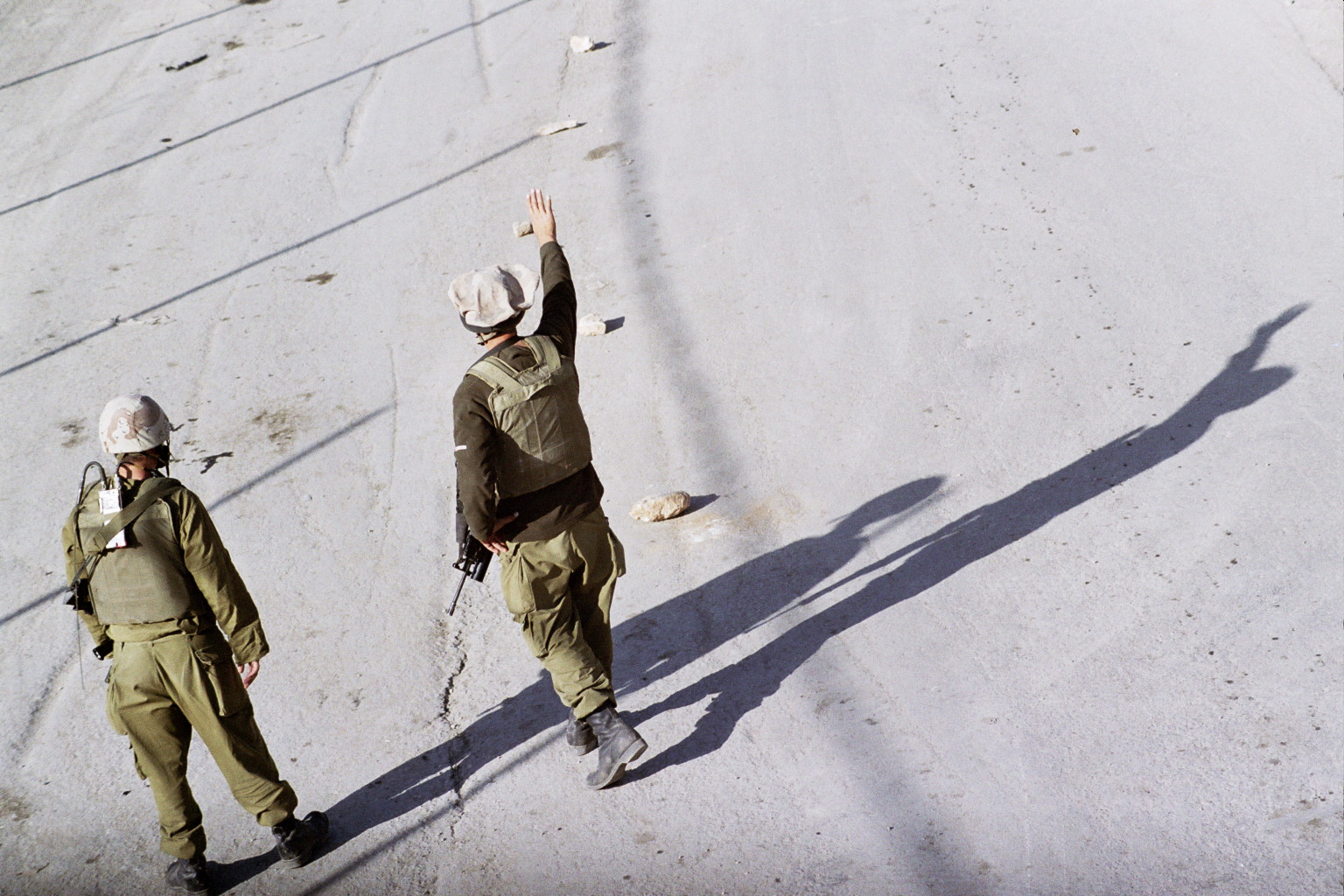
I personally felt that the behavior, no matter how much I thought I was nice during my service, because I did also try to be nice – it doesn’t matter, because the feeling that I had, with people around me in the military, is that we treat them (the Palestinians) like animals, that in our eyes they are sub-humans, that you are allowed to do loads of things to them that we’d never do to Jews. And also how we talked about them, that they’re kind of animals for entertainment that we play with at the checkpoint and they don’t realize. We lock the [electronic] carousels on them, we laugh at them, we talk about this woman’s body and how that one looks and things like that. We feel comfortable asking for cigarettes from people who pass through the checkpoint… When I was released from the military, little by little I went back to the thoughts I’d had before the military with the insights I had in the military. Of really seeing what the occupation is, I saw what it is to live under occupation and I saw why people (soldiers) continue, why people feel fine standing day after day at a checkpoint for 8 or 16 hours and [to see] what it does to them in terms of their behavior. How much easier it is to look down on the person in front of you. Because, like, you’re going crazy at the checkpoints. I understood what occupation really is. Before that, like, everything was slogans, it was all in theory. Yes, Bil’in is depressing, Na’alin is depressing (Palestinian villages which became symbolic of the popular struggle against the separation fence, where large weekly demonstrations would take place), and it’s depressing that the Palestinians’ olive trees that are hundreds of years old are being uprooted (the testifier is referring to a common form of settler violence). Everything is, like, fine and dandy, but even the cases of the things like uprooting olive trees, those are the more extreme things compared to just the day-to-day [reality] of Palestinians as they pass through checkpoints and they need to work and all that, and I, like, understand this routine, suddenly I understand [what it’s like] to live in a place that doesn’t give you the possibility to develop. I’m not even talking about Gaza, where you don’t even have the option, you’re actually living in a ghetto. But even in the [occupied] territories (the West Bank), there are so many injustices in this environment and people live in this reality day by day. And you say, like, wow, what a sweet soldier I am for bringing this snack to a Palestinian kid. Which is, like, what does that matter? Really. And I think that for all the things I was talking about, no one was held accountable, no one was investigated, no one looked into it. So it just feels to me like if I don’t let this out and if other people don’t talk about it, it won’t be discovered. We need to admit things to ourselves at a certain point. And it's processes of atonement, forgiveness, that I want to ask for. Because it’s this “I did something bad, my judgment wasn’t right, I can excuse it all I want, I don’t want to excuse it.” What I want to say is: You know what, it’s something that I’m probably going to carry with me all my life and thank God I don’t do reserve duty, because I wouldn’t be able to keep doing it. And at the end of the day it’s people who live an inconceivable reality, almost surreal. We can’t keep coming and saying that we’re the most moral army in the world. The military does things very often for no reason, [we] man the Beka'ot [checkpoint] for no reason. Practically it’s all kind of to prove that ‘we have the bigger one.’ So I just want to come and say, to admit: I wasn’t moral. Even if I didn’t do these things [myself], I saw these things being done. How did I not say anything and how did I stand by and stay silent? I had the voice, but this disconnect of sitting and listening to music and eating pizza at the checkpoint, just talking with friends like you’re on some kind of break at school, and on the other side, between puffs of a cigarette, in between songs, and in between laughs, getting up and removing all the people from the vehicle, doing a security search - and then repeat. A checkpoint routine. Just, there was a big disconnect from the situation itself, and it’s important to say this.
home
- Testimonies
- Activities
- Media & Content
- About

 terms of use & privacy policy